
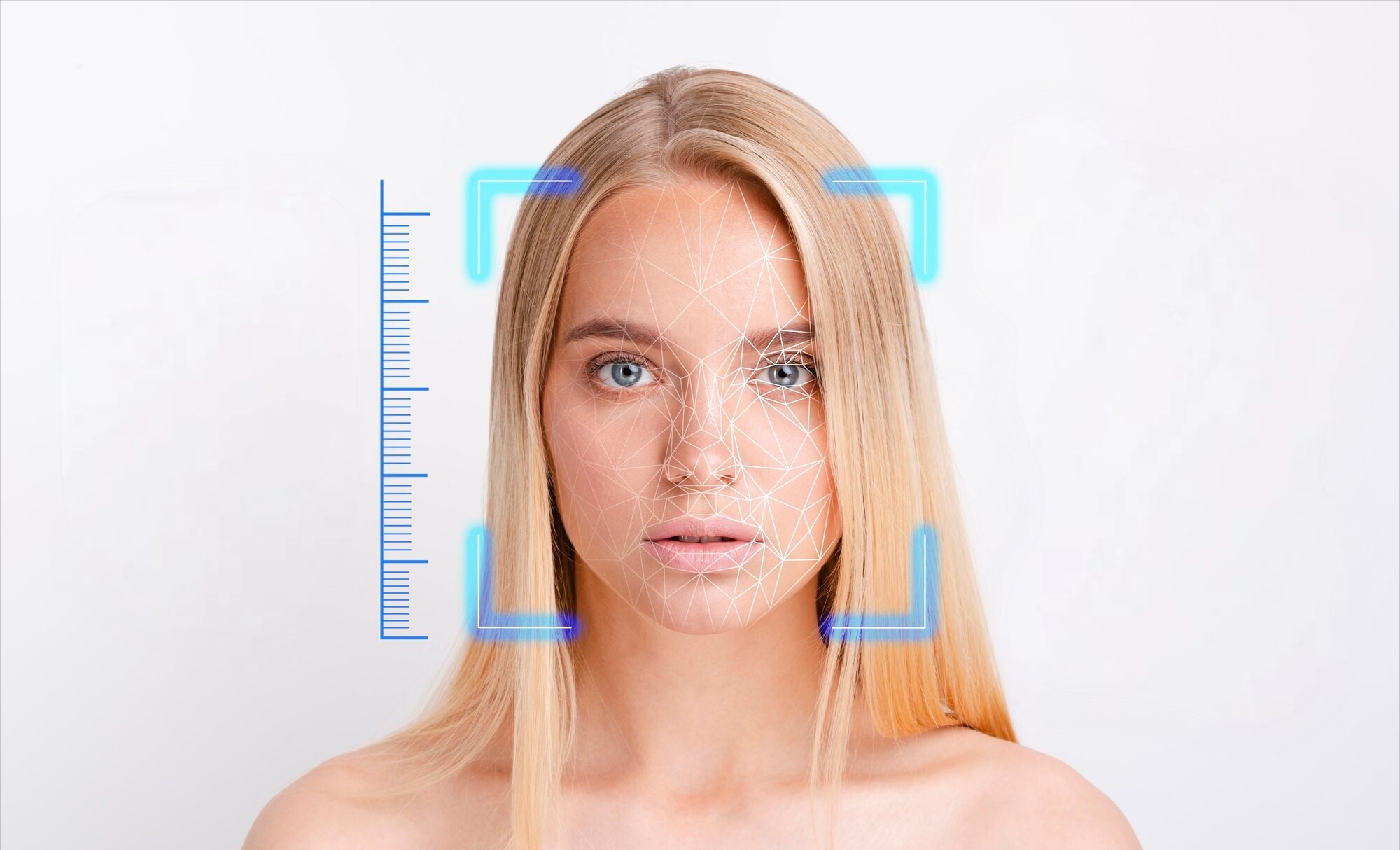
Have you ever wondered why some ID photos look better and get accepted faster than others? One big factor is facial symmetry. In this article, we’ll dive into what facial symmetry really is, why it matters so much in your ID photos, and how you can use simple tips to make sure your next photo looks great and passes every requirement.
Facial Symmetry
Facial symmetry refers to the degree to which the left and right sides of the face are mirror images of each other. When you draw an imaginary vertical line straight down the center of your face, symmetry means that features like your eyes, eyebrows, cheeks, lips, and nose are aligned and proportionate on both sides. This balance doesn’t mean perfect identical halves—because no human face is perfectly symmetrical—but rather that the differences between each side are minimal and subtle enough to appear harmonious. The more symmetrical your face, the more balanced it looks to the observer, giving an impression of harmony and visual appeal.
Why Does Facial Symmetry Matter
Facial symmetry matters far beyond simply looking good in photos. From an evolutionary psychology standpoint, humans are wired to perceive symmetrical faces as more attractive and trustworthy because symmetry often signals good health and strong genetics. This unconscious preference plays a significant role in social interactions and first impressions. When it comes to ID photos, which are official and legal representations of a person, symmetry helps present a clear and balanced image that is easier for people and machines to recognize reliably.
Moreover, the importance of symmetry extends into modern technology, especially in the United States where automated facial recognition systems are widely used in airports, government offices, and law enforcement. These systems rely on measuring facial landmarks that work best when features are balanced. A photo with poor symmetry—due to lighting, pose, or facial expressions—can confuse recognition software, potentially causing delays or rejections in official processes. Therefore, achieving good facial symmetry in ID photos helps ensure smoother identification, faster approvals, and better security.
ID Photos
The Purpose of ID Photos
In the U.S., ID photos serve as crucial official documents that connect a person’s visual identity to legal or administrative records. Whether it’s for a passport, driver’s license, state ID card, or workplace badge, these photos must provide a reliable representation of the individual at the time the ID is issued. Their purpose goes beyond mere appearance—they act as tools for verifying identity, preventing fraud, and facilitating security protocols at airports, banks, government buildings, and more. Because these photos play a role in legal, travel, and security contexts, they need to be clear, standardized, and instantly recognizable.
Furthermore, ID photos have to remain consistent over time, which is why authorities require neutral expressions and standardized poses. This consistency ensures that the person in the photo can be matched accurately even years after the photo was taken, which is critical for safety and legal purposes. In the U.S., agencies like the Department of State or Department of Motor Vehicles (DMV) enforce strict guidelines to maintain this uniformity and reliability across millions of ID photos issued annually.
Common Requirements for ID Photos
To maintain clarity and uniformity, official U.S. ID photos follow strict requirements. Some of the most important standards include:
- Neutral facial expression: No smiling, frowning, or exaggerated expressions to keep facial features consistent.
- Plain, light-colored background: Usually white or off-white to avoid distractions and ensure clear contrast.
- Direct front-facing posture: The head must be centered and facing straight into the camera, preventing angles that distort facial symmetry.
- Proper lighting: Even lighting that minimizes shadows on the face and background to ensure all facial features are clearly visible.
- No headwear or accessories: Unless worn for religious or medical reasons, hats, glasses, and jewelry are usually not allowed as they can obscure key facial features.
These requirements are not arbitrary—they are carefully designed to maximize facial symmetry and ensure the photo meets both human and machine recognition standards. Following these rules helps prevent photo rejection and guarantees that your ID will be accepted in official processes across the United States.
The Science Behind Facial Symmetry
How Facial Symmetry Affects Perception
Research consistently shows that people with symmetrical faces are often perceived as healthier, more trustworthy, and more competent. This isn’t just a cultural preference; it has deep roots in human evolution. Symmetry signals genetic stability and good health because asymmetry can sometimes indicate developmental stress or illness. From an evolutionary standpoint, choosing partners with symmetrical faces meant selecting mates who were likely to pass on strong, healthy genes. This instinct remains deeply embedded in our subconscious judgments, influencing how we perceive others in everyday life.
Moreover, symmetrical faces are easier for the brain to process visually. When faces are balanced and proportionate, our brains can recognize and remember them more quickly. This efficiency in processing also extends to perceptions of reliability and attractiveness. In social and professional environments, these subtle impressions can influence interactions and decisions, making facial symmetry a powerful factor in how we are perceived.
Facial Symmetry and Human Attractiveness
From Hollywood celebrities to everyday individuals, symmetrical facial features often rank higher on attractiveness scales. This unconscious bias is so universal that it transcends cultures and is reflected in everything from art to advertising. When officials or software analyze ID photos, this bias plays a role too. A more symmetrical photo is typically clearer and easier to match, which speeds up verification processes and reduces errors.
Symmetry also affects attractiveness by contributing to facial harmony—the way features like eyes, nose, and mouth align and complement each other. Balanced proportions create a pleasing aesthetic, making symmetrical faces more memorable. This explains why many people naturally position themselves to emphasize symmetry during photo sessions, including for official IDs where a good first impression matters.
| Aspect | Explanation | Evolutionary Significance | Practical Implication in ID Photos |
| Health Perception | Symmetry signals good health and genetic stability | Mate selection and survival advantage | Clearer, more reliable photo identification |
| Trustworthiness | Symmetrical faces perceived as more honest and reliable | Social cooperation and group bonding | Enhances acceptance and confidence in ID photos |
| Cognitive Processing | Easier for the brain to recognize and remember | Quick identification in social settings | Faster machine and human facial recognition |
| Attractiveness and Harmony | Balanced features create aesthetic appeal | Partner selection and social status | Better photo outcomes and fewer rejections |
Psychological Impact of Symmetry in Faces
Symmetry in the face can have a powerful psychological impact on both the person being observed and the observer. For the individual, presenting a symmetrical face in photos can boost confidence and self-esteem. When people know they look balanced and “right,” they tend to feel more comfortable and self-assured. This increased confidence is particularly important in professional and legal contexts where ID photos are used, such as job applications, travel documents, or security clearances.
For observers, symmetrical faces facilitate smoother communication and create an impression of reliability and competence. This is why official photos often require strict guidelines to maximize symmetry and neutral expressions—ensuring that anyone viewing the photo, from border agents to employers, forms a positive and accurate first impression. In short, symmetry helps create an ideal visual foundation for trust and effective identity verification.
Facial Symmetry’s Importance in Official ID Photos
Legal and Technical Standards
In the United States, governmental agencies such as the Department of State and the Department of Motor Vehicles enforce strict legal and technical standards for ID photos. These standards exist to ensure that each photo provides a clear, accurate representation of the individual’s face. One of the core components of these standards is facial symmetry, as it ensures that no facial features are distorted, shadowed, or obscured, which could compromise identification.
By requiring photos to be taken head-on with neutral expressions and even lighting, these standards minimize asymmetry caused by poor angles or lighting. This legal framework supports the reliability of ID documents, helping officials worldwide recognize and verify identities quickly and accurately, preventing fraud and enhancing security.
How Symmetry Influences Facial Recognition Technology
Modern facial recognition technology, widely adopted across the U.S. in airports, government checkpoints, and law enforcement, depends heavily on detecting symmetrical landmarks on the face—such as the distance between the eyes, nose shape, and mouth position. Symmetrical photos make it easier for algorithms to identify these landmarks accurately.
If a photo is too asymmetrical—due to poor head positioning, uneven lighting, or facial expressions—the software may fail to match the photo with stored biometric data, leading to rejection or delays. In the context of ID photos, this can mean extra verification steps or even denial of access to services, making facial symmetry critical for smooth automated processing.
Avoiding Photo Rejection Due to Asymmetry
Many people don’t realize that factors like tilting the head, uneven lighting, or unnatural facial expressions can cause their face to appear asymmetric in photos. This is a common reason for photo rejection in official processes such as passport applications or driver’s licenses. Understanding the role of facial symmetry helps individuals prepare better for photo sessions.
Simple measures like facing the camera directly, maintaining a neutral expression, ensuring even lighting, and avoiding accessories that cover parts of the face significantly reduce the risk of asymmetry-induced rejection. Being aware of these can save time and prevent frustrating rejections in important identity-related processes.